

 R More




 Headphone Accessories
 Cable Accessories
 Vinyl Accessories
 Compact Disc Accessories


New 2025 collection! From a very meticulous collector, this comes from a collection great highly sought-after items! Long Out Of Print, won't last long! Only 1 Copy Available!
Serial #744/999
Vinyl Grade: Sealed
Jacket Grade: Mint
Out Of Print!!! Limited to Only 999 Numbered Copies Worldwide!
This Numbered, Limited Edition Deluxe Box Set features 9 LPs pressed on 180 Gram Virgin Vinyl!
Cut by Hendrik Pauler and Pressed at Pallas in Germany!
Exceptional Acoustic Brilliance!
This is really like the good old days a new complete Beethoven cycle on vinyl LP! Of course, Andreas Spreer also had several Beethoven symphonies pressed on vinyl for Tacet (each of which is also worth recommending), but now all nine are available in a high-quality box with a sturdy plastic slipcase. Inside are LPs which have been impeccably pressed by Pallas on 180-gram vinyl and a lavish, large-format 32-page booklet.
"Every record collection should include at least one set of Beethoven symphonies even if you don't like classical music... Beethoven was the rock star and if your previous Beethoven listening didn't convince you of that, these angular, fast-paced, just plain exciting readings by Jarvi played with "back at ya' " aggressive precision by the Deutsche Kammerphilharmonie Bremen will convince you." - Michael Fremer, www.musicangle.com, Music 11/10, Sound 10/10
"The playing is crisp and clean with emotions provided by modern dynamic intensity not old school ponderous "high drama." Järvi comes right at you, not over you. The instrumental lines are transparently drawn and cleanly rendered, which allows the orchestrations to reveal inner detail complexities, while at the same time cohering and gelling into whole statements." - Michael Fremer, www.musicangle.com, Music 11/10, Sound 10/10
"The mixes are very coherent and despite the mulit-miking, produce a fully realized picture of an orchestra playing live in a space. The strings are up front and great depth is produced as the other elementsthe brass, winds and percussion are carefully and believably layered front to back with even more space revealed behind the rearmost instruments. But more than the spatial coherence, the instrumental timbres and textures are natural and believable and macrodynamic resolution is sensational." - Michael Fremer, www.musicangle.com, Music 11/10, Sound 10/10
"I've certainly heard many live and recorded performances of most of these symphonies, and these by Järvi and Die Deutsche Kammerphilharmonie Bremen are probably the most exciting, pulse-quickening and elegantly informed that I've heard on record. Critics with more expertise than I have seem to agree so I place myself in good company when I recommend this beautifully packaged and presented box set. Production is limited so all I can say is don't miss out!" - Michael Fremer, www.musicangle.com, Music 11/10, Sound 10/10
Click Here to read the entire review!
"His whirlwind Allegro - possibly the fastest I've heard - is a tour de force of speed, control, and articulation, withholding full power until he goes into overdrive for the recapitulation and coda, where I was lifted out of my seat." - Paul Seydor, The Absolute Sound
In other respects as well, everything is of the very best quality. The distinguished Polyhymnia team around Jean-Marie Geijsen did the original high-resolution digital multichannel recordings and the editing. The stereo SACD mix outstanding, by the way was not simply used for the analog master, however. Instead, Ralf Koschnicke of the Duisberg audiophile label Acousence remixed the multitracks on the analog level. The press matrices were made by none other than Hendrik Pauler at Pauler Acoustics, in the studios of his father, Günter, also committed to absolutely superb sound. It was worth the expenditure. The award-winning recordings, dating from 2004 to 2008, sound overwhelmingly good.
"Today I received the Beethoven-Jarvi lp box set... All the critics agree about the outstanding performance of the orchestra and conductor. My expectative was very high when I placed the order. The conclusion is easy: it's the most amazing lp recording I've ever heard!! ...As the American Express motto said some things in life are "priceless"; in this case it's only cost around $300!!!" - Raul G., Elusive Disc customer
The Performance:
Anyone who has heard them in the concert hall will not soon forget this experience. The Deutsche Kammerphilharmonie Bremen is an orchestra that reacts with incredible alertness, carries out the conductor's directions with lightning speed and passion characteristics which are sadly lacking with a good many municipal symphony orchestras. Perhaps it is because the musicians are partners in their own orchestra, which means that they decide all matters democratically but also bear the business risks themselves, whereas in a "normal" orchestra the musicians generally enjoy civil service status. The fact that the Deutsche Kammerphilharmonie was the first orchestra ever to receive the German Record Critics' Certificate of Special Merit in 2009 is justified, as demonstrated by this Beethoven cycle, which was recorded from 2004 to 2008 and, after its release on SACD, is now available for a limited time as an 9LP box set!
There are countless recordings on the market of this most important symphony cycle in musical history. Whereas Wilhelm Furtwängler emphasized the solemn dimension of the music with relatively measured tempos, a tradition continued by such disciples as Barenboim, many contemporary conductors, like Herreweghe, Vänskä, Manze, etc., adopt an approach influenced by the principles of historical performance practice with a lean sound in the strings and winds, brisk tempos, and sharper accents.
The Kammerphilharmonie and Paavo Järvi also follow the latter path. Although they use modern instruments except for natural trumpets and timpani compared to the traditional symphony orchestra, their reduced forces come close to the performance practice of Beethoven's day. The result is a relatively bright, transparent sound in which even seasoned Beethoven listeners can discover previously hidden musical details.
With a good many modern conductors, the emancipation from tradition sometimes seems "contrived" Beethoven brushed the wrong way. With Paavo Järvi, however, everything flows organically. Although he does not shape the Andante cantabile con moto from the First Symphony as an expansive stream of sound, with a brisk tempo he gives it a supple, elegant character, and its charming melody is not lost. During the first movement of the Fifth Symphony, with its famous "fate" motif, he does not emphasize its dramatic weight but takes the movement briskly and jauntily. With sharp accents, abrupt dynamic changes, and a driving tempo, the subsequent climaxes ultimately seem no less explosive than with the "old greats."
The Sound:
From a purely interpretational standpoint, this recording enjoys reference character and need not fear comparison with those of Furtwängler and early Karajan. The sound of the SACD already ranks with the best among the Beethoven symphonies currently available on the market producer Philip Traugott and the Polyhymnia International sound engineers have done a fine job.
This vinyl edition now surpasses all its predecessors. Played on a good hi-fi system, the timbres sound even more natural and the instruments more vivid simply sensational. Other vinyl boxes with Karajan (1962, re-released in 2007) and Bernstein are no match by comparison. The pressings are also exemplary, cut by Hendrik Pauler and pressed on virgin vinyl by Pallas. The background noise in soft passages is extremely low, and no groove noise is perceptible. This Beethoven box is already a milestone in recent vinyl history. Only live does the Deutsche Kammerphilharmonie play more impressively!
About The Mastering:
Ralf Koschnicke is a music producer, sound engineer, and owner of the ACOUSENCE label. For several years, he has also supervised vinyl productions, such as this Beethoven box:
The Beethoven symphonies were originally recorded digitally. Why was the source material still suitable for transfer to vinyl?
Crucial to the suitability for a record was the fact that a High-Resolution Digital Format was available and that it was possible to generate a master with significantly higher information density than the original release by remixing the individual tracks. The procedure of simply cutting the CD master on vinyl, which is unfortunately used all too often in producing vinyl editions of modern recordings, would have been unsuitable for us.
Why did you mix and master the recording again specifically for vinyl?
If you want to fully exploit the superiority of analog storage on vinyl, digital mixing sets tight limits, because resolution and/or precision are lost. Therefore, for the analog vinyl version the final sound mix was carried out again, also at the analog level, in an expensive process. Compared to the CD version, however, I did not change the actual balance of the mix.
What equipment did you work with?
The recordings passed through a sophisticated combination of different equipment, partly on the digital level at the highest scanning rate and partly on the analog level, depending on the suitability for the particular function. At every stage, we also used equipment we developed or modified ourselves.
Did you pursue a particular sound aesthetic?
I expect realistic, clear timbres and a three-dimensional stage which is not limited to the loudspeaker level, room depth, and an airy breadth beyond the loudspeaker basis from a recording. Even more important, however, is the effect of the music itself. For me, an LP is the musical recording medium with the more intense listening experience.
The Right Nine:
Releasing a Beethoven cycle nowadays is either a sign of insanity or the courage to take a considerable risk one would think. It can also be a sign of persistent effort, though rare these days. That is what happened with Paavo Järvi and the Bremen Kammerphilharmonie, who recorded the complete symphonies over a period of several years. This is by no means a rush job just to produce an album, however there is certainly no shortage of Beethoven recordings. No, the Estonian-born Järvi and the Bremen orchestra have prepared their Beethoven thoroughly they actually achieved the feat of playing all nine at a few festivals, spread over several days, of course.
There is a wide array of distinguished predecessors, some of whom have tried their hand at the colossal task several times, in particular, Herbert von Karajan, who recorded the cycle four times altogether, three of them with the Berlin Philharmonic. Many still regard his recordings from 1961/62 as absolute masterpieces.
And, in fact, that can continue to be the case, despite Järvi's fantastic new recording. Whereas Karajan's "Beethoven of the century" marks the pinnacle of traditional orchestral music, with a strong conductor and an orchestra that follows him unconditionally, the Bremen Kammerphilharmonie takes a completely different approach. Naturally, there can be no doubt that Paavo Järvi has his orchestra at least as well under control as Karajan does his Philharmonic, yet he deserves credit for integrating the musicians into his music-making as equals. This dust-free, "democratic" Beethoven sounds as razor-sharp and precise as it does passionate. Any attempt at late- and post-Romantic interpretation is jettisoned, which seems simple with the first two symphonies because they still stand clearly in the tradition of Haydn and Mozart. Beginning with the "Eroica," however, the listener begins to realize what a revolutionary new perspective Järvi has on the composition. He does not impose an external theoretical structure on the music, but develops it from within. Of course, it is impossible to interpret a composition completely neutrally, but with these recordings you have the feeling of being closer to Beethoven than ever before. Even the old warhorses the Fifth and the Ninth shine in new splendor, simply because no one attempts to endow them with it. Reduced to the essentials, these works, which are often played so pompously, take on an entirely new musical quality with a distinctly leaner sound there is much less bluster but a wealth of new things to discover. You can listen to this Beethoven cycle over and over again for a long time without the slightest trace of boredom. And, more often than you would think, old Beethoven, who is not exactly regarded as a wellspring of humor, coaxes a broad grin out of you with his exuberant musical inspirations.
Befitting its standing, this LP box includes an extensive booklet which, among other things, provides detailed background material on each of the symphonies. The recordings are outstanding for their painstaking and flawless production, dynamic sound, and superior pressing quality. The sturdy cardboard box is packaged in a red plastic protective slipcase. The classical music production of the year!
Features:
Limited to Only 999 Numbered Copies!
Numbered, Limited Edition Deluxe Box
High-Quality 180 Gram Virgin Vinyl 9LP Set
Master cut by Hendrik Pauler at Pauler's Acoustics in Northeim, Germany
Pressed at Pallas Group GmbH, Diepholz, Germany
Extensive Large-Format 32-Page Booklet
Housed in Sturdy Hard-Cover Box in Red-Translucent Acrylic Protective Slipcase Cover
Box Dimensions: 32 x 32 x 4 cm
Musicians:
Christiane Oelze, soprano
Petra Lang, alto
Klaus Florian Vogt, tenor
Matthias Goerne, baritone
Deutscher Kammerchor
The Deutsche Kammerphilharmonie Bremen (The German Chamber Philharmonic)
Paavo Järvi, conductor
Selections:
Ludwig van Beethoven (1770-1827)
Record 1 - A Side:
Symphony No. 1 in C major op. 21
I. Adagio molta - Allegro con brio
II. Andante cantabile con moto
III. Menuetto: Allegro molto e vivace
IV. Adagio - Allegro molto e vivace
Record 1 - B Side:
Symphony No. 2 in D major op. 36
I. Adaio molto - Allegro con brio
II. Larghetto
Record 2 - A Side:
Symphony No. 2 in D major op. 36 (cont.)
III. Scherzo: Allegro
IV. Allegro molto
Record 2 - B Side:
Symphony No. 3 in E flat major op. 55 "Eroica"
I. Allegro con brio
Record 3 - A Side:
Symphony No. 3 in E flat major op. 55 "Eroica" (cont.)
II. Marcia funebre: Adagio assai
Record 3 - B Side:
Symphony No. 3 in E flat major op. 55 "Eroica" (cont.)
III. Scherzo: Allegro vivace
IV. Finale: Allegro molto
Record 4 - A Side:
Symphony No. 4 in B flat major op. 60
I. Adagio - Allegro vivace
II. Adagio
Record 4 - B Side:
Symphony No. 4 in B flat major op. 60
III. Allegro vivace
IV. Allegro ma non troppo
Record 5 - A Side:
Symphony No. 5 in C minor op. 67
I. Allegro con brio
II. Andante con moto
Record 5 - B Side:
Symphony No. 5 in C minor op. 67 (cont.)
III. Allegro
IV. Allegro - Presto
Record 6 - A Side:
Symphony No. 6 in F major op. 68 "Pastorale"
I. Erwachen heiterer Gefuhle bei der Ankunft auf dem Lande: Allegro ma non troppo
II. Szene am Bach: Andante molto moto
Record 6 - B Side:
Symphony No. 6 in F major op. 68 "Pastorale" (cont.)
III. Lustiges Zusammensein der Landieute: Allegro
IV. Gewitter, Sturm: Allegro
V. Hirtengesang - Frohe und dankbare Gefuhle nach dem Sturm: Allegretto
Record 7 - A Side:
Symphony No. 7 in A major op. 92
I. Poco sostenuto - Vivace
II. Allegretto
Record 7 - B Side:
Symphony No. 7 in A major op. 92 (cont.)
III. Presto - assai meno presto
IV. Allegro con brio
Record 8 - A Side:
Symphony No. 8 in F major op. 93
I. Allegro vivace e con brio
II. Allegretto scherzando
III. Tempo di Menuetto
IV. Allegro vivace
Record 8 - B Side:
Symphony No. 9 in D minor op. 125
I. Allegro ma non troppo un poco maestoso
Record 9 - A Side:
Symphony No. 9 in D minor op. 125 (cont.)
II. Molto vivace
III. Adagio molto e cantabile
Record 9 - B Side:
Symphony No. 9 in D minor op. 125 (cont.)
IV. Presto - Allegro assai
Serial #744/999
Vinyl Grade: Sealed
Jacket Grade: Mint
Out Of Print!!! Limited to Only 999 Numbered Copies Worldwide!
This Numbered, Limited Edition Deluxe Box Set features 9 LPs pressed on 180 Gram Virgin Vinyl!
Cut by Hendrik Pauler and Pressed at Pallas in Germany!
Exceptional Acoustic Brilliance!
This is really like the good old days a new complete Beethoven cycle on vinyl LP! Of course, Andreas Spreer also had several Beethoven symphonies pressed on vinyl for Tacet (each of which is also worth recommending), but now all nine are available in a high-quality box with a sturdy plastic slipcase. Inside are LPs which have been impeccably pressed by Pallas on 180-gram vinyl and a lavish, large-format 32-page booklet.
"Every record collection should include at least one set of Beethoven symphonies even if you don't like classical music... Beethoven was the rock star and if your previous Beethoven listening didn't convince you of that, these angular, fast-paced, just plain exciting readings by Jarvi played with "back at ya' " aggressive precision by the Deutsche Kammerphilharmonie Bremen will convince you." - Michael Fremer, www.musicangle.com, Music 11/10, Sound 10/10
"The playing is crisp and clean with emotions provided by modern dynamic intensity not old school ponderous "high drama." Järvi comes right at you, not over you. The instrumental lines are transparently drawn and cleanly rendered, which allows the orchestrations to reveal inner detail complexities, while at the same time cohering and gelling into whole statements." - Michael Fremer, www.musicangle.com, Music 11/10, Sound 10/10
"The mixes are very coherent and despite the mulit-miking, produce a fully realized picture of an orchestra playing live in a space. The strings are up front and great depth is produced as the other elementsthe brass, winds and percussion are carefully and believably layered front to back with even more space revealed behind the rearmost instruments. But more than the spatial coherence, the instrumental timbres and textures are natural and believable and macrodynamic resolution is sensational." - Michael Fremer, www.musicangle.com, Music 11/10, Sound 10/10
"I've certainly heard many live and recorded performances of most of these symphonies, and these by Järvi and Die Deutsche Kammerphilharmonie Bremen are probably the most exciting, pulse-quickening and elegantly informed that I've heard on record. Critics with more expertise than I have seem to agree so I place myself in good company when I recommend this beautifully packaged and presented box set. Production is limited so all I can say is don't miss out!" - Michael Fremer, www.musicangle.com, Music 11/10, Sound 10/10
Click Here to read the entire review!
"His whirlwind Allegro - possibly the fastest I've heard - is a tour de force of speed, control, and articulation, withholding full power until he goes into overdrive for the recapitulation and coda, where I was lifted out of my seat." - Paul Seydor, The Absolute Sound
In other respects as well, everything is of the very best quality. The distinguished Polyhymnia team around Jean-Marie Geijsen did the original high-resolution digital multichannel recordings and the editing. The stereo SACD mix outstanding, by the way was not simply used for the analog master, however. Instead, Ralf Koschnicke of the Duisberg audiophile label Acousence remixed the multitracks on the analog level. The press matrices were made by none other than Hendrik Pauler at Pauler Acoustics, in the studios of his father, Günter, also committed to absolutely superb sound. It was worth the expenditure. The award-winning recordings, dating from 2004 to 2008, sound overwhelmingly good.
"Today I received the Beethoven-Jarvi lp box set... All the critics agree about the outstanding performance of the orchestra and conductor. My expectative was very high when I placed the order. The conclusion is easy: it's the most amazing lp recording I've ever heard!! ...As the American Express motto said some things in life are "priceless"; in this case it's only cost around $300!!!" - Raul G., Elusive Disc customer
The Performance:
Anyone who has heard them in the concert hall will not soon forget this experience. The Deutsche Kammerphilharmonie Bremen is an orchestra that reacts with incredible alertness, carries out the conductor's directions with lightning speed and passion characteristics which are sadly lacking with a good many municipal symphony orchestras. Perhaps it is because the musicians are partners in their own orchestra, which means that they decide all matters democratically but also bear the business risks themselves, whereas in a "normal" orchestra the musicians generally enjoy civil service status. The fact that the Deutsche Kammerphilharmonie was the first orchestra ever to receive the German Record Critics' Certificate of Special Merit in 2009 is justified, as demonstrated by this Beethoven cycle, which was recorded from 2004 to 2008 and, after its release on SACD, is now available for a limited time as an 9LP box set!
There are countless recordings on the market of this most important symphony cycle in musical history. Whereas Wilhelm Furtwängler emphasized the solemn dimension of the music with relatively measured tempos, a tradition continued by such disciples as Barenboim, many contemporary conductors, like Herreweghe, Vänskä, Manze, etc., adopt an approach influenced by the principles of historical performance practice with a lean sound in the strings and winds, brisk tempos, and sharper accents.
The Kammerphilharmonie and Paavo Järvi also follow the latter path. Although they use modern instruments except for natural trumpets and timpani compared to the traditional symphony orchestra, their reduced forces come close to the performance practice of Beethoven's day. The result is a relatively bright, transparent sound in which even seasoned Beethoven listeners can discover previously hidden musical details.
With a good many modern conductors, the emancipation from tradition sometimes seems "contrived" Beethoven brushed the wrong way. With Paavo Järvi, however, everything flows organically. Although he does not shape the Andante cantabile con moto from the First Symphony as an expansive stream of sound, with a brisk tempo he gives it a supple, elegant character, and its charming melody is not lost. During the first movement of the Fifth Symphony, with its famous "fate" motif, he does not emphasize its dramatic weight but takes the movement briskly and jauntily. With sharp accents, abrupt dynamic changes, and a driving tempo, the subsequent climaxes ultimately seem no less explosive than with the "old greats."
The Sound:
From a purely interpretational standpoint, this recording enjoys reference character and need not fear comparison with those of Furtwängler and early Karajan. The sound of the SACD already ranks with the best among the Beethoven symphonies currently available on the market producer Philip Traugott and the Polyhymnia International sound engineers have done a fine job.
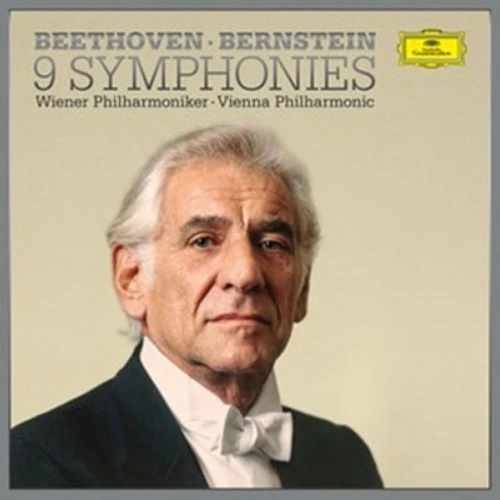
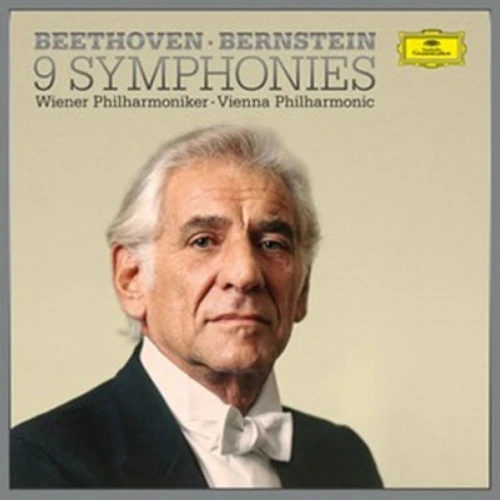
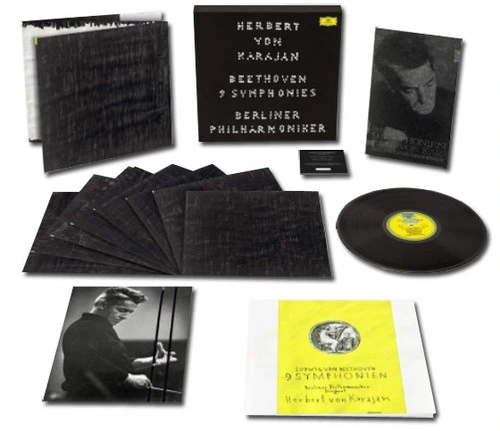
This vinyl edition now surpasses all its predecessors. Played on a good hi-fi system, the timbres sound even more natural and the instruments more vivid simply sensational. Other vinyl boxes with Karajan (1962, re-released in 2007) and Bernstein are no match by comparison. The pressings are also exemplary, cut by Hendrik Pauler and pressed on virgin vinyl by Pallas. The background noise in soft passages is extremely low, and no groove noise is perceptible. This Beethoven box is already a milestone in recent vinyl history. Only live does the Deutsche Kammerphilharmonie play more impressively!
About The Mastering:
Ralf Koschnicke is a music producer, sound engineer, and owner of the ACOUSENCE label. For several years, he has also supervised vinyl productions, such as this Beethoven box:
The Beethoven symphonies were originally recorded digitally. Why was the source material still suitable for transfer to vinyl?
Crucial to the suitability for a record was the fact that a High-Resolution Digital Format was available and that it was possible to generate a master with significantly higher information density than the original release by remixing the individual tracks. The procedure of simply cutting the CD master on vinyl, which is unfortunately used all too often in producing vinyl editions of modern recordings, would have been unsuitable for us.
Why did you mix and master the recording again specifically for vinyl?
If you want to fully exploit the superiority of analog storage on vinyl, digital mixing sets tight limits, because resolution and/or precision are lost. Therefore, for the analog vinyl version the final sound mix was carried out again, also at the analog level, in an expensive process. Compared to the CD version, however, I did not change the actual balance of the mix.
What equipment did you work with?
The recordings passed through a sophisticated combination of different equipment, partly on the digital level at the highest scanning rate and partly on the analog level, depending on the suitability for the particular function. At every stage, we also used equipment we developed or modified ourselves.
Did you pursue a particular sound aesthetic?
I expect realistic, clear timbres and a three-dimensional stage which is not limited to the loudspeaker level, room depth, and an airy breadth beyond the loudspeaker basis from a recording. Even more important, however, is the effect of the music itself. For me, an LP is the musical recording medium with the more intense listening experience.
The Right Nine:
Releasing a Beethoven cycle nowadays is either a sign of insanity or the courage to take a considerable risk one would think. It can also be a sign of persistent effort, though rare these days. That is what happened with Paavo Järvi and the Bremen Kammerphilharmonie, who recorded the complete symphonies over a period of several years. This is by no means a rush job just to produce an album, however there is certainly no shortage of Beethoven recordings. No, the Estonian-born Järvi and the Bremen orchestra have prepared their Beethoven thoroughly they actually achieved the feat of playing all nine at a few festivals, spread over several days, of course.
There is a wide array of distinguished predecessors, some of whom have tried their hand at the colossal task several times, in particular, Herbert von Karajan, who recorded the cycle four times altogether, three of them with the Berlin Philharmonic. Many still regard his recordings from 1961/62 as absolute masterpieces.
And, in fact, that can continue to be the case, despite Järvi's fantastic new recording. Whereas Karajan's "Beethoven of the century" marks the pinnacle of traditional orchestral music, with a strong conductor and an orchestra that follows him unconditionally, the Bremen Kammerphilharmonie takes a completely different approach. Naturally, there can be no doubt that Paavo Järvi has his orchestra at least as well under control as Karajan does his Philharmonic, yet he deserves credit for integrating the musicians into his music-making as equals. This dust-free, "democratic" Beethoven sounds as razor-sharp and precise as it does passionate. Any attempt at late- and post-Romantic interpretation is jettisoned, which seems simple with the first two symphonies because they still stand clearly in the tradition of Haydn and Mozart. Beginning with the "Eroica," however, the listener begins to realize what a revolutionary new perspective Järvi has on the composition. He does not impose an external theoretical structure on the music, but develops it from within. Of course, it is impossible to interpret a composition completely neutrally, but with these recordings you have the feeling of being closer to Beethoven than ever before. Even the old warhorses the Fifth and the Ninth shine in new splendor, simply because no one attempts to endow them with it. Reduced to the essentials, these works, which are often played so pompously, take on an entirely new musical quality with a distinctly leaner sound there is much less bluster but a wealth of new things to discover. You can listen to this Beethoven cycle over and over again for a long time without the slightest trace of boredom. And, more often than you would think, old Beethoven, who is not exactly regarded as a wellspring of humor, coaxes a broad grin out of you with his exuberant musical inspirations.
Befitting its standing, this LP box includes an extensive booklet which, among other things, provides detailed background material on each of the symphonies. The recordings are outstanding for their painstaking and flawless production, dynamic sound, and superior pressing quality. The sturdy cardboard box is packaged in a red plastic protective slipcase. The classical music production of the year!
Features:
Limited to Only 999 Numbered Copies!
Numbered, Limited Edition Deluxe Box
High-Quality 180 Gram Virgin Vinyl 9LP Set
Master cut by Hendrik Pauler at Pauler's Acoustics in Northeim, Germany
Pressed at Pallas Group GmbH, Diepholz, Germany
Extensive Large-Format 32-Page Booklet
Housed in Sturdy Hard-Cover Box in Red-Translucent Acrylic Protective Slipcase Cover
Box Dimensions: 32 x 32 x 4 cm
Musicians:
Christiane Oelze, soprano
Petra Lang, alto
Klaus Florian Vogt, tenor
Matthias Goerne, baritone
Deutscher Kammerchor
The Deutsche Kammerphilharmonie Bremen (The German Chamber Philharmonic)
Paavo Järvi, conductor
Selections:
Ludwig van Beethoven (1770-1827)
Record 1 - A Side:
Symphony No. 1 in C major op. 21
I. Adagio molta - Allegro con brio
II. Andante cantabile con moto
III. Menuetto: Allegro molto e vivace
IV. Adagio - Allegro molto e vivace
Record 1 - B Side:
Symphony No. 2 in D major op. 36
I. Adaio molto - Allegro con brio
II. Larghetto
Record 2 - A Side:
Symphony No. 2 in D major op. 36 (cont.)
III. Scherzo: Allegro
IV. Allegro molto
Record 2 - B Side:
Symphony No. 3 in E flat major op. 55 "Eroica"
I. Allegro con brio
Record 3 - A Side:
Symphony No. 3 in E flat major op. 55 "Eroica" (cont.)
II. Marcia funebre: Adagio assai
Record 3 - B Side:
Symphony No. 3 in E flat major op. 55 "Eroica" (cont.)
III. Scherzo: Allegro vivace
IV. Finale: Allegro molto
Record 4 - A Side:
Symphony No. 4 in B flat major op. 60
I. Adagio - Allegro vivace
II. Adagio
Record 4 - B Side:
Symphony No. 4 in B flat major op. 60
III. Allegro vivace
IV. Allegro ma non troppo
Record 5 - A Side:
Symphony No. 5 in C minor op. 67
I. Allegro con brio
II. Andante con moto
Record 5 - B Side:
Symphony No. 5 in C minor op. 67 (cont.)
III. Allegro
IV. Allegro - Presto
Record 6 - A Side:
Symphony No. 6 in F major op. 68 "Pastorale"
I. Erwachen heiterer Gefuhle bei der Ankunft auf dem Lande: Allegro ma non troppo
II. Szene am Bach: Andante molto moto
Record 6 - B Side:
Symphony No. 6 in F major op. 68 "Pastorale" (cont.)
III. Lustiges Zusammensein der Landieute: Allegro
IV. Gewitter, Sturm: Allegro
V. Hirtengesang - Frohe und dankbare Gefuhle nach dem Sturm: Allegretto
Record 7 - A Side:
Symphony No. 7 in A major op. 92
I. Poco sostenuto - Vivace
II. Allegretto
Record 7 - B Side:
Symphony No. 7 in A major op. 92 (cont.)
III. Presto - assai meno presto
IV. Allegro con brio
Record 8 - A Side:
Symphony No. 8 in F major op. 93
I. Allegro vivace e con brio
II. Allegretto scherzando
III. Tempo di Menuetto
IV. Allegro vivace
Record 8 - B Side:
Symphony No. 9 in D minor op. 125
I. Allegro ma non troppo un poco maestoso
Record 9 - A Side:
Symphony No. 9 in D minor op. 125 (cont.)
II. Molto vivace
III. Adagio molto e cantabile
Record 9 - B Side:
Symphony No. 9 in D minor op. 125 (cont.)
IV. Presto - Allegro assai


 FREE SHIPPING